Samvatsar is a sanskrit word which means a “year” or an “era”. The write-up explores the meaning of the word that originated thousands of years ago, and its meaning in the modern context.
Please, Share, Like and Subscribe
Please “like” 👍 and provide feedback in the “Leave a Reply” 📋 area (scroll down to the bottom of this page) if you enjoy reading the article ✍️. I would love to know if these are helpful and how I can improve it. If you find this blog site interesting then please remember to “subscribe” 🤝.
Samvatsar
There are different types of Samvatsars used in various regions of India, such as Vikram Samvat, Shalivahana Shaka, and others, each starting from different historical events. For instance, Vikram Samvat begins from the legendary victory of King Vikramaditya over the Sakas, while Shalivahana Shaka begins from the coronation of King Shalivahana.
Within the Pushti Sampradāya (sect), founded by Shri Vallabhāchārya, there exists a lunar calendar known as the Krśńā Samvat. This calendar is based on the birth of Lord Krśńā and dates back 5000 years. Samvatsars that are associated with Lord Buddha and Shri Ādi Shankarāchārya also exist.
Mānas Samvatsar
Morāri bāpu aka Bāpu, has been reciting Rām kathā for almost 6 decades. His method of providing spiritual discourse is unique and resonates strongly with the youth, and the current generation. Bāpu chooses a subject or theme for the nine-day spiritual discourse/talk.
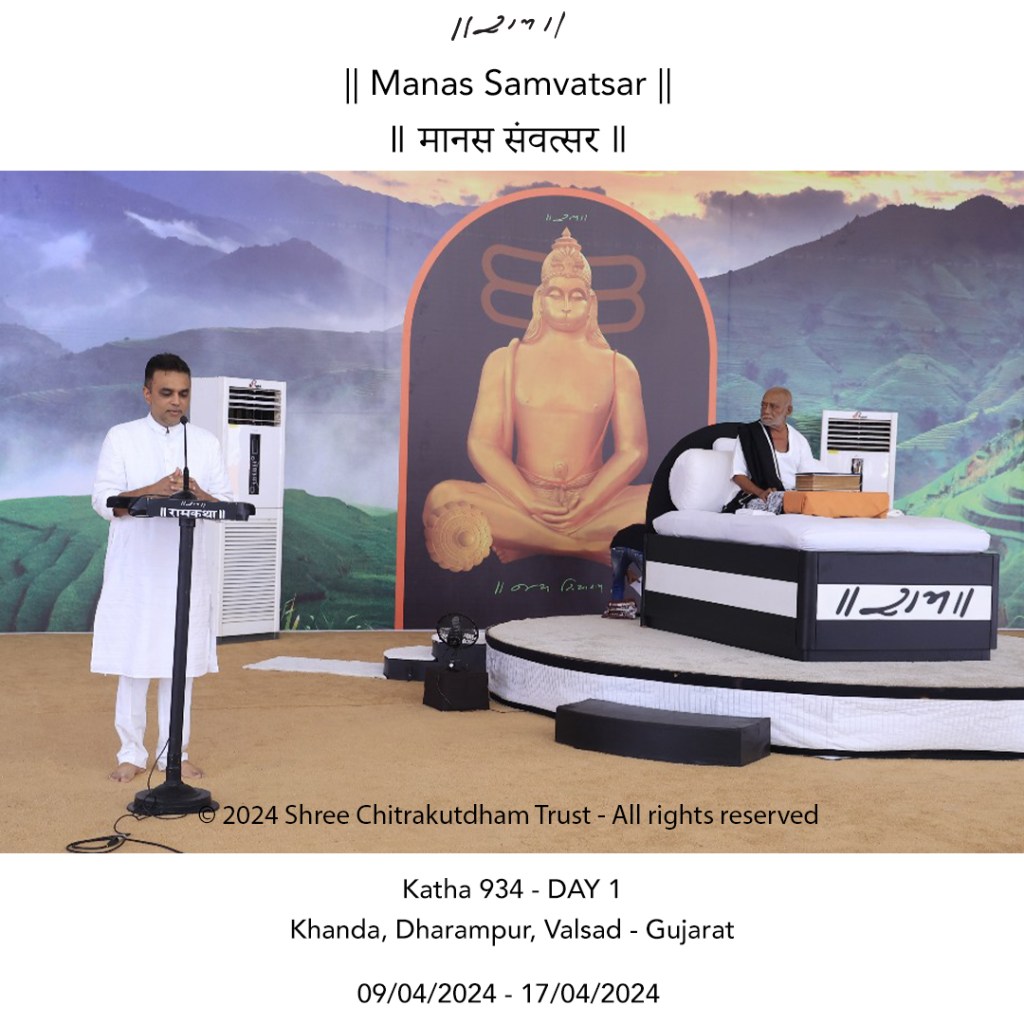
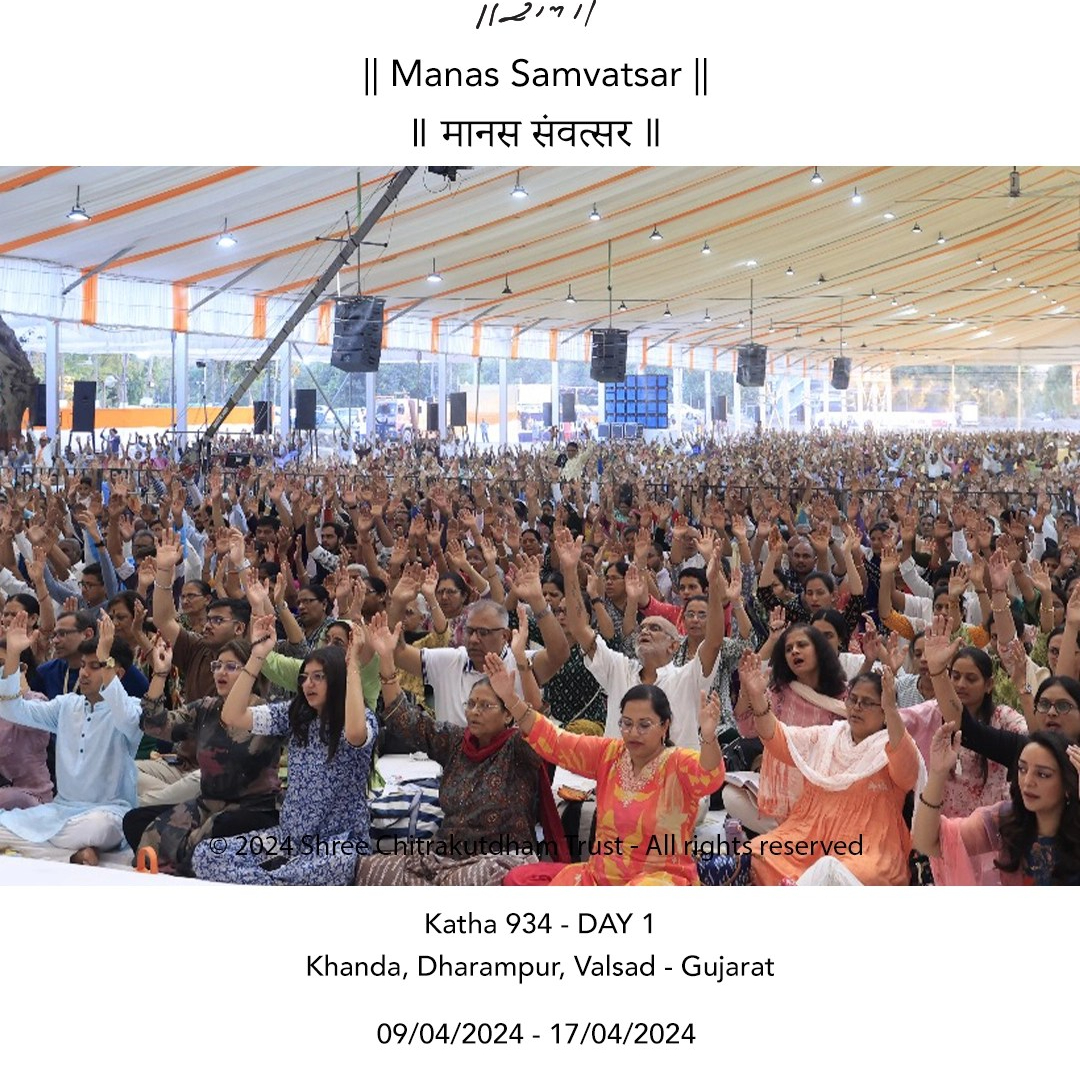
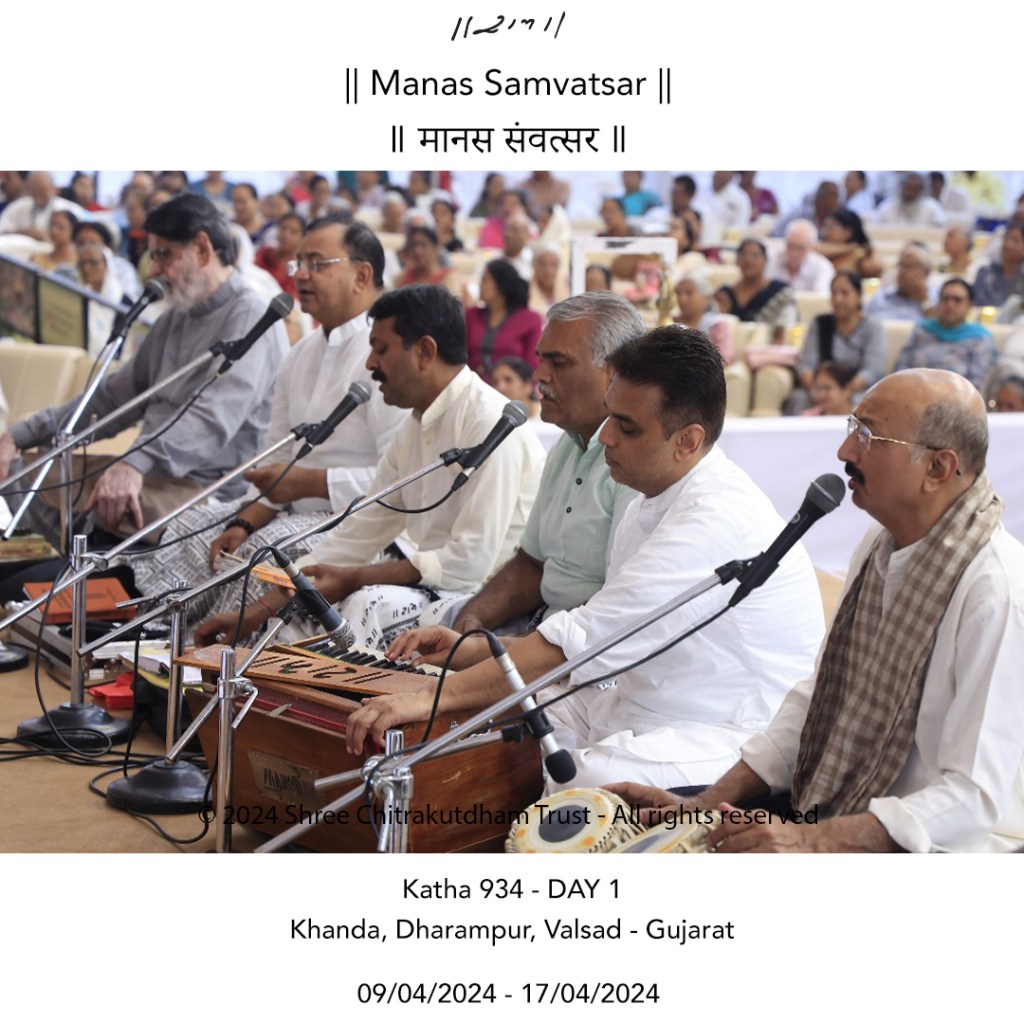
The theme of the current Rām kathā, which is being held at Dharampur, Gujarat from 09th April 2024 to 17th April 2024, is Mānas Samvatsar.
While a “samvatsar” generally starts with an occasion, an event, such as victory in a significant battle or the birth of a notable figure, like Jesus, Buddha, or Krśńā, in the modern context it can also refer to a “new beginning”.
Bāpu, for the Khanda, Dharampur, Valsad – Gujarat Rām Kathā, chose the theme of Mānas Samvatsar, possibly for the following two reasons.

The Rām kathā at Khanda, Dharampur started on the first day of the month of Chaitra. This is the first day of the year as per Vikram Samvatsar. On this day, the lord of creation, Brahmā ji, created the universe. This links the kathā to the historical context of the start of an era, and hence Mānas Samvatsar as one of the reasons.
Among the most influential thinkers of the modern times is Bāpu. The location for this kathā is in a remote tribal place where the inhabitants Adivāsi and Bhil people has been residing for many years.
Sadly, the people in the tribal area have been forgotten by the system, and their growth and development has been relatively slow when compared to the other urban parts of the country. The stagnation of growth has led the tribal belt to many financial and social challenges.


The nation’s politics and religious institutions have taken advantage of the tribal people’s vulnerabilities and needs. Religious groups are increasingly using incentives, miracles, and fear tactics to persuade people to quit their original religion (mool dharma), causing them to lose their identity and feel detached from their roots over time.
In Vikram Samvat 1631, on the 09th day of the month of Chaitra, Tulsidās ji offered his granth Rāmcharitamānas. Bāpu stated that the 9th day of the Chaitra month marks the start of Mānas Samvatsar, a fresh era that teaches us how to live our lives by studying Lord Ram’s character and promotes inclusivity in the society. This was the second reason for naming this Rām Kathā as Mānas Samvatsar.
The Kshama Yatra
At the start of the kathā, Morāri Bāpu expressed his regret, and apologised, to the Ādivāsi and Bhil community and stated that it was now necessary to make amends. He stated that this kathā should be seen as a fresh beginning, where tribal community will be given more importance in the future.
This is his “Kshamā Yātrā,” a journey to apologise and make amends to everyone for his or other sanātana dharma guru’s actions that may have intentionally or unintentionally adversely affected the people. He admitted that this is his 934th katha overall and that he should have visited tribal regions more frequently and recited far more kathas than he has in other urban or developed places.
Ghar Wāpsi – Return Home
He additionally encouraged people who left the Hindu religion of Sanātan Dharma to return to their spiritual homes, Ghar Wapsi. The leaders of Sanātan dharma have acknowledged and will address mistakes. He also stated that he plans to make at least one annual trip to the tribal belt region.
Mānas Samvatsar – Kathā Chopāi
Apart from the core theme of Rām kathā, Bāpu selects one chopai (verse) from about 11,000 verses written by Tulsidās ji in his granth (book) Rāmcharitamānas, to serve as the primary kathā chopai pertinent to the subject matter.
The one below was the katha chopai chosen for Mānas Samvatsar.

संबत सोरह सै एकतीसा । करउँ कथा हरि पद धरि सीसा ॥
saṁbata soraha sai ekatīsā | karau̐ kathā hari pada dhari sīsā ||
नौमी भौम बार मधु मासा । अवधपुरीं यह चरित प्रकासा ॥
naumī bhauma bāra madhu māsā | avadhapurī̐ yaha ćarita prakāsā ||
बालकाण्ड – दोहा ३३
Bālkānd – Dohā 33
In his epic poetry, Tulsidās ji states that according to Vikram Samvat, the charitra (character) of my lord Rām took the form of Rāmcharitamānas and came into being on tuesday, the ninth day of the month of Chaitra in the year 1631.
The following chopai comes right after the previous verse:
जेहि दिन राम जनम श्रुति गावहिं। तीरथ सकल तहाँ चलि आवहिं।।
jēhi dina rāma janama śruti gāvahiń. teeratha sakala tahāñ chali āvahiń..
Meaning: When the songs of Rām janam (birth of Lord Rām) were sung on the banks of Saryu river in Ayodhyā, all the gods came to enjoy the occasion as if it was the main Teertha (pilgrimage). According to Bāpu, the villages of the Ādivāsi people should also be known as Ādi Teertha Vāsi, which translates to “the most superior of pilgrimages.”
Mānas Samvatsar – Photo Gallery




Mānas Samvatsar – Kathā Sār
What have I learned from the above message of Morāri Bāpu, and how can I further improve upon?
This, in my opinion, is my spiritual mentor Bāpu telling me that it is a beginning of the new era and a time for me to reset too. It is time for me to invent a “New Me”.
I may have also intentionally and inadvertently caused harm to my family, friends, colleagues, and other individuals I know or would not have met in the journey of my life. I apologise to each and every one of them. It’s possible that I let them down when I had the opportunity to help and support them. It’s possible that I was too preoccupied with realising my own goals and dreams, and overlooked the chance to include them. Furthermore, I might have reacted in a way that, looking back, I can now say wasn’t my best behavior.
I too want to be a part of this “Kshmā Yātrā” with my guru. To all the people, I would like to say that, “I am sorry”, and promise to make things right. I know how difficult life can be if the necessary help doesn’t arrive when it is needed because I come from a humble beginning.
While this is a time to celebrate a new beginning, it is said that our actions doesn’t change until we do “paschatāp” and purify our mind, i.e. have a remorse.

I shall be fasting for nine days, or the duration of the kathā, for the whole Chaitra Navrātri as part of the paschātāp. This fasting permits me to consume roots only once a day, and only in a small amount. I am conscious that this is an insignificant gesture in comparison to my previous conduct, but it is just the beginning. I can only wish that this can help purify my past actions and guide me towards the right intent for the future.
When I begin my journey, Kshamā Yātrā, to become a “New Me”, may Shri Hari bless me with vivek (intellect) to distinguish between the right and the wrong. May He give me the strength to help those in need when it is most important to them.
Would you like to join me in the yātrā? If yes, then how would you choose to bring in a “New Me” and what will be that?
Jai Siyā Rām, Jai Shree Krśńa and Michhāmi Dukkadam 🙏


 Bhavin Shukla
Leave a comment