I often wonder if my posts are reaching the intended audience, if people are actually reading them, and why, despite my best efforts to create and share such authentic stories connected to my personal experiences, I hardly receive any “comments” or “likes” on them. This made me consider using catchy headlines to draw readers in and boost traffic, but it also made me consider my true nature i.e. be true to yourself and others too, as I always ponder things through and consistently reflect to improve, which is what inspired me to write this article. Should I use Clickbait Thumbnails to market the blogs I write?
Thumbnail
A thumbnail is an image that highlights what your video is about. It functions similarly to a book cover or blurb, but for a video.
The benefit of this concept is that it saves time for the audience in understanding the video’s content. It aims to assist the user in determining if a video is of interest or not.
Clickbait
However, it is claimed that where there is a prosperous town, there is also a waste dump, implying that good and bad are always complementary.
Meaning that a thumbnail, even if it is intended to assist the viewer in making a decision, can be misused. To enhance video views, the video creator may include an unrelated image that has nothing to do with the video, attempting to exaggerate a situation in order to attract viewers.
The practice of writing sensationalised or misleading headlines in order to attract clicks on a piece of content is called Clickbait. It often relies on exaggerating claims or leaving out key information in order to encourage traffic.
What are the ramifications of the clickbait technique? It’s said that the proof of the pudding is in eating.
We know how tempting it is to watch a video when the viewing numbers are high, or when the video title or the thumbnail is sensational.
It definitely attracts the traffic. Previous viewers would have left a footprint to inform us that the video is not worth viewing, but with mental health concerns on the rise, we only see the “likes” and not the “dislikes”.
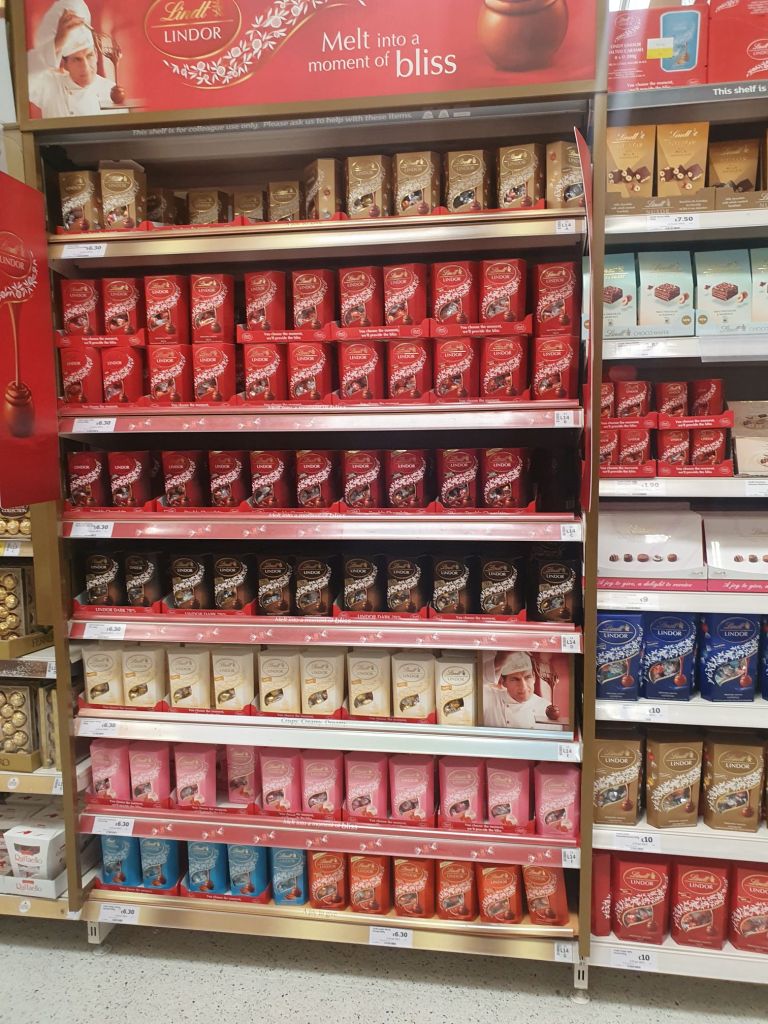
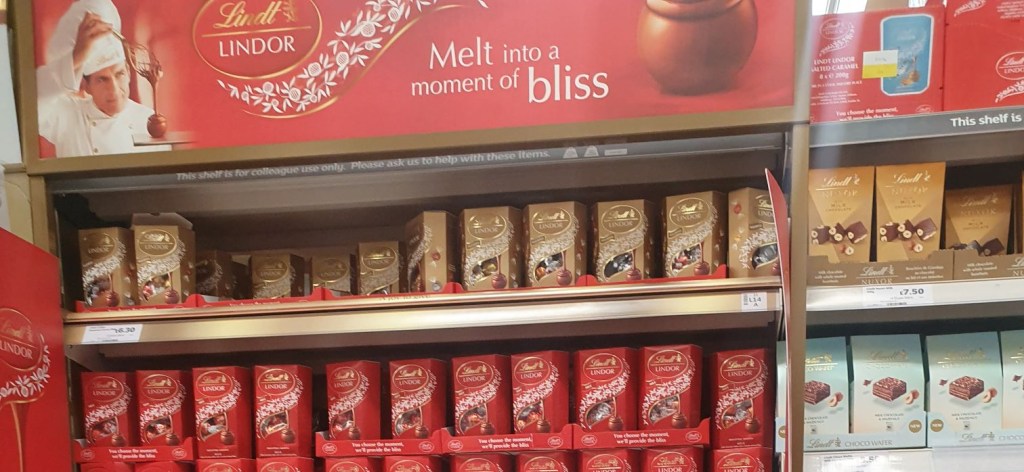
The snap, for instance, is from the Sainsbury’s aisle that I visited over the weekend, was the store’s most attractively designed and appealing aisle overall. “Melt into a moment of bliss” is the punchline or clickbait in this instance. Even while sugar really does pose serious health risks to the general public, clickbait continues to be effective.
Avoiding Clickbait Traps
Avoiding clickbait traps can be tricky, but here are some tips to help you steer clear:
- Be Skeptical: If a headline seems too sensational or too good to be true, it probably is. Approach with caution.
- Check the Source: Verify the credibility of the website or publication. Stick to reputable sources for news and information.
- Read Beyond the Headline: Don’t judge an article solely by its headline. Take the time to read the content and assess its quality and relevance.
- Look for Red Flags: Watch out for exaggerated language, all caps, excessive punctuation, or promises of exclusive information.
- Consider the Tone: Is the content balanced and informative, or does it seem designed to provoke an emotional response or outrage?
- Check Multiple Sources: Cross-reference information from multiple sources to ensure accuracy and objectivity.
- Be Wary of “You Won’t Believe” Claims: Headlines that use phrases like “you won’t believe” or “shocking” are often clickbait designed to lure you in.
- Ignore Irrelevant Images: Sometimes clickbait articles use misleading or unrelated images to grab attention. Focus on the content, not the images.
- Think Before You Share: Before sharing an article or link, take a moment to consider whether it’s reliable and whether it adds value to your network.
- Use Browser Extensions: There are browser extensions available that can help identify and block clickbait content
Life’s Thumbnail and Clickbait
We, too, have thumbnails of our lives, and the concept of Clickbait makes me wonder if we are truthfully portraying ourselves, or if we keep a hypocrite thumbnail to attract attention.
I’m sure we all do; otherwise, the cosmetics, fashion, and marketing industries would not have thrived.
People’s life’s thumbnails can be referred to as “personality“.
We all work hard to build our personalities and how we can make our impression to the outer world. We are taught from childhood to work hard in order to develop our personalities.
Personality is how others perceive us in various situations, and it can be far from reality. A “persona” in ancient Roman theater was a mask that performers used to represent various personas in plays. The verb personare, which meaning “to sound through” or “to speak through,” is the root of the Latin term persona itself. Over time, the idea of wearing masks and assuming diverse personas came to represent the more broader concept of the social roles and identities that people exhibit in a variety of situations.
Over time, “persona” grew to stand for the external qualities, actions, and appearances that individuals exhibit to others, both in the context of theater and in daily life. A persona is a contrast to one’s actual self. A persona is the representation of a person that they present to the public or to certain circumstances, which is different from who they really are.
The question is, do we want to live our lives as defined by others, or do we want to decide for ourselves what good looks like for us? Also, there is a trade-off with the Clickbait approach, which we are well aware of. It may attract visitors, but if it is not genuine then it cannot have longer audience retention.
An observation to bring up, we can fool some of the people all of the time, all of the people some of the time but not all of the people all of the time.
This teaches us an essential lesson about life. Are we looking for long-lasting, meaningful relationships with quality people, or are we more interested in attracting more connections and being in the crowd? Do we want individuals to be with us for the short or long term?
If it is about long-lasting and eternal relationships then we must have a suitable, an original, thumbnail of our lives. It is fine for individuals not to “click it”, but if they do, they may rather end up viewing the full story!
On the contrary, we must exercise caution and avoid falling for life’s clickbaits. The advice given in previous sections on how to avoid clickbaits also applies to real life. Remember, all that glitters is not gold. It is worthwhile looking into if our present social circle, and the network of friends or colleagues, is a result of our attraction to any clickbait.
This takes me back to where I started. I am okay with having no “likes” or “comments” on my article. I don’t mind if a limited number of people read these. For me, if it is read by one genuine user and if it can make a difference to his/her life then that is good enough for me. The only reason I have for requesting likes, shares, and subscriptions is to enhance the search engine ranking of my articles and connect with that one person for whom my articles can be a source of inspiration and hope.
What is your view of life’s Clickbait, has your experience been positive? What do you think, originality or personality, which one will you pick?
Please, Share, Like and Subscribe
Please “like” 👍 and provide feedback in the “Leave a Reply” 📋 area (scroll down to the bottom of this page) if you enjoy reading the article ✍️. I would love to know if these are helpful and how I can improve it. If you find this blog site interesting then please remember to “subscribe” 🤝

 Bhavin Shukla
Leave a comment