A Brief Introduction to Sundara Kānd
Sundara-Kānd is the fifth chapter of the epic poetry Rāmāyana written in Sanskrit language by Rishi (saint) Vālmiki. Sundar Kand is considered as the essence of Rāmāyāna.
Saint Tulsidās ji in the 15th century AD rewrote the Rāmāyana in Awadhi language, a language that was spoken by the common man and named the granth (book) as Rāmacharitamānas. He retained the names of the chapters from Rāmāyana, with the fifth chapter called as Sundar Kānd.
In Hinduism, reciting of “Sundara-Kānd” is considered as one of the most fruitful prayers on an auspicious day, especially to the people who has their main deity as Lord Rāma.
The word Sundar / Suṃdara in Awadhi language means beautiful, and the word Kānd means part, section or chapter. Sundar Kand, means the most beautiful of the sections / chapters of the Rāmcharitamanas.
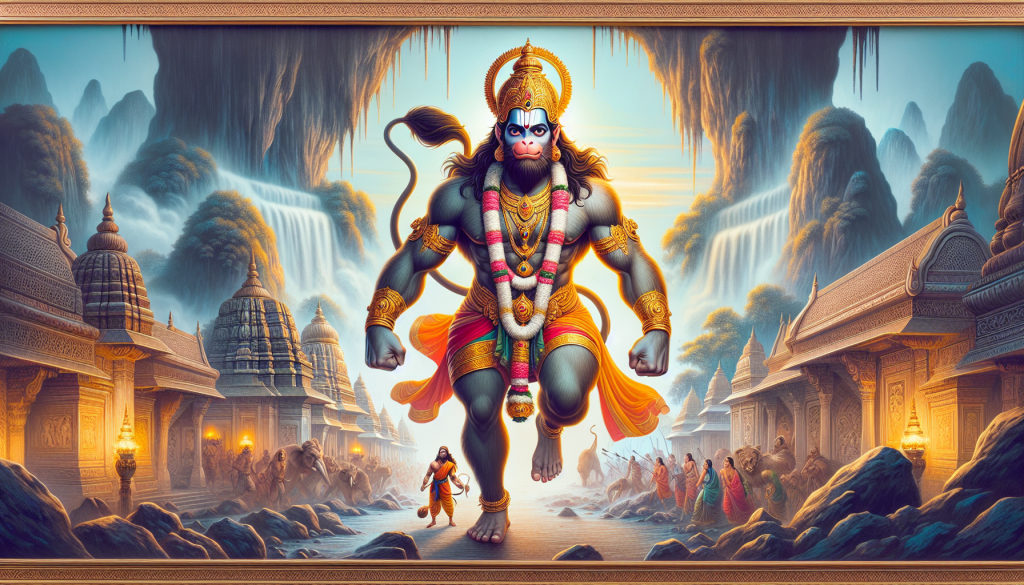
In brief, Sundara Kānd is that part of the Rāmāyan story where Hanumānji is sent to Lankā by Lord Rāma to find out the whereabouts of Sitā mātā, Lord Rāma’s consort, who has been kidnapped by Rāvanā, the demon king. Sundara Kānd has total sixty verses in Ramacharitamānas to describe the story.
About This Article
This article examines the numerous theories explaining why Sundara Kānd is regarded as very significant. I am very grateful to Guruji Himmat Singh Sinha for his narration on Sundara Kānd; he is the source of most of the text stated below.
Please, Share, Like and Subscribe
These write-ups require a significant amount of effort due to the research involved. To spread happiness further and reach more people, please “like” 👍 and leave comments in the “Leave a Reply” 📋 section (scroll down to the bottom of this page) if you enjoyed reading the post ✍️. I’d love to know if these are useful and how I can improve them. If you find this blog interesting, please remember to “subscribe” 🤝.
📉 Significance #1: The Trend of the Number of Verses
In Rāmcharitamānas, the first chapter Bal Kānda has 361 verses, the second chapter Ayodhya Kānda has 326 verses, the third chapter Aranya Kānda contains 46 verses and the fourth chapter Kiskindha Kānda: 30 verses. The number of verses decreases until Sundara Kānda, as it has 60 verses and it keeps increasing in rest of the three chapters.
The increase of the number of verses from Sundara Kānda onwards, indicates growth and improvement. This is one of the main reasons. It is believed that the recitation of Sundara Kānda brings growth in life.
🙏 Significance #2: Vandana
The mangalā charan i.e., invoking of prayers before beginning any work, for the first three Kānda offers prayers to first Vishnu and then Shiva. Whereas, the last three offers prayers first to Shiva and then Vishnu.
Sundara Kānda doesn’t offer prayers to Shiva, but instead offers prayers to Hanumān ji.
Sundara Kānda is the story of the valour of Śri Hanuman ji. It is hence believed that the presence of Hanuman ji has the potential to defeat any of the life’s challenges. Hanuman ji is also called Sankat Mochan, the slayer of the challenges. He is also praised as Mangala Murti Maruta Nandan, Sakal Amangal Mul Nikandan, meaning Hanumān ji brings good fortune in everyone’s life.
🪐 Significance #3: Auspicious Number, The Number Nine 9️⃣
It is said that number nine is a complete number (purna ank, purnānk), because after nine comes ten, which is made from one and zero. There are total nine occurences of the word “Sundara” in Sundara kānd, and hence recitation of just Sundara Kānd in itself is termed as a complete prayer, a prayer that makes one full.
The ninth day of the Hindu Calendar is also considered auspicious. Lord Rāma took birth on the ninth day of the month, hence Rāma Navmi.
1️⃣ First Occurence of the word Sundar
सिंधु तीर एक भूधर सुंदर। कौतुक कूदि चढ़ेउ ता ऊपर।।
बार बार रघुबीर सँभारी। तरकेउ पवनतनय बल भारी।।
siṃdhu tīra ēka bhūdhara suṃdara. kautuka kūdi caḍhaēu tā ūpara..
bāra bāra raghubīra saombhārī. tarakēu pavanatanaya bala bhārī..
[Ramcharitamanas, Sundara-Kānda, Chopai.1.3]
Tulsidas ji in this verse explains the qualities of a leader. A leader doesn’t follow the normal routine but takes a direction to ensure a better outcome for the people dependent on him. The word “bhūdhara suṃdara”, means a beautiful mountain. Mountain is used as a symbol for something that stands tall and is stable in nature, i.e. the one that shows leadership.
The followers flow in the direction of the river, but for someone like Hanumānji who is a leader, his personality is of a beautiful mountain. He stands tall, like a mountain, and changes the flow of the river.
Swami Vivekananda once said, “Give me one hundred ‘believing’ young men and I will transform India as the number one nation in the entire world…”. Believing here means the ones who truly believe that they can change the nation for the greater good are the who are ‘living’, and are not just blind followers.
2️⃣ Second Occurence of the word Sundar
कनक कोट बिचित्र मनि कृत सुंदरायतना घना।
चउहट्ट हट्ट सुबट्ट बीथीं चारु पुर बहु बिधि बना।।
kanaka kōṭa bicitra mani kṛta suṃdarāyatanā ghanā.
cauhaṭṭa haṭṭa subaṭṭa bīthīṃ cāru pura bahu bidhi banā..
[Ramcharitamanas, Sundara-Kānda, Chhand.3.1]
When Hanumān ji reaches Lankā he sees that the walls of the fort is made up of gold. Gold here is symbolic to materialistic life.
The message here is that the materialistic elements will tempt us and attempt to distract us, but be stable like a mountain, do not get mesmerised because of the shine and ensure that you walk through to achieve your goals.
3️⃣ Third Occurence of the word Sundar
स्याम सरोज दाम सम सुंदर। प्रभु भुज करि कर सम दसकंधर।।
सो भुज कंठ कि तव असि घोरा। सुनु सठ अस प्रवान पन मोरा।।
syāma sarōja dāma sama suṃdara. prabhu bhuja kari kara sama dasakaṃdhara..
sō bhuja kaṃṭha ki tava asi ghōrā. sunu saṭha asa pravāna pana mōrā..
[Ramcharitamanas, Sundara-Kānda, Chopai.10.2]
When Rāvanā told mātā Sitā that if she does not accept to be his consort within thirty days then he will come and kill her. To this Sitā mātā responds by describing the strength of Rāma’s arms. She says that Rāma’s arms are like lotus to his devotees but they are like a trunk of an elephant to his enemies, which he uses it to uproot their enemies like a tree.
She further says that if Rāvanā has any doubt then he should go and check with Sugreevā. Just one arrow shot via these arms went through powerful Vali’s body.
The arms are symbol of support. The indication here is that Rāma has awaken the soul of number of fighters (monkeys), and it is with this support they will soon be marching towards Lankā.
4️⃣ Fourth Occurence of the word Sundar
तब देखी मुद्रिका मनोहर। राम नाम अंकित अति सुंदर।।
चकित चितव मुदरी पहिचानी। हरष बिषाद हृदयँ अकुलानी।।
taba dēkhī mudrikā manōhara. rāma nāma aṃkita ati suṃdara..
cakita citava mudarī pahicānī. haraṣa biṣāda hṛdayaom akulānī..
[Ramcharitamanas, Sundara-Kānda, Chopai.13.1]
Śri Hanumān ji says that there is no better name then the name of Rāma. His name is good enough to liberate one from the sufferings and from the cycle of birth and death.
The name itself is a form of yogā.
5️⃣ Fifth Occurence of the word Sundar
सुनहु मातु मोहि अतिसय भूखा। लागि देखि सुंदर फल रूखा।।
सुनु सुत करहिं बिपिन रखवारी। परम सुभट रजनीचर भारी।।
sunahu mātu mōhi atisaya bhūkhā. lāgi dēkhi suṃdara phala rūkhā..
sunu suta karahiṃ bipina rakhavārī. parama subhaṭa rajanīcara bhārī..
[Ramcharitamanas, Sundara-Kānda, Chopai.17.4]
This is when Hanumān ji says to Sitā mātā that he has been feeling very hungry and would like to eat the fruits from the trees of Ashoka vātika, the place where Sitā mātā was kept. Tulsidās ji uses the phrase suṃdara phala, meaning, tasty and beautiful fruits.
Tulsidāsji indicates that one can get all the benefits, i.e. the fruits with the recitation of Sundara-kand alone.
6️⃣ Sixth Occurence of the word Sundar
सावधान मन करि पुनि संकर। लागे कहन कथा अति सुंदर।।
कपि उठाइ प्रभु हृदयँ लगावा। कर गहि परम निकट बैठावा।।
sāvadhāna mana kari puni saṃkara. lāgē kahana kathā ati suṃdara..
kapi uṭhāi prabhu hṛdayaom lagāvā. kara gahi parama nikaṭa baiṭhāvā..
[Sundara-Kānda, Chopai.33.2]
While telling Rām kathā to mātā Sitā, Shiv ji went deep into dhyān and started saying most beautiful story of lord Rāma.
Lord Rāma’s story is the most beautiful of all the stories, and the part when Shiv ji goes into dhyān and starts saying it more beautifully, which is Sundara Kānd, has to be the best of the entire katha.
As Vālmiki ji says in Rāmāyan about Sundar Kānd,
सुन्दरे सुन्दरो रामः सुन्दरे सुन्दरी कथा
सुन्दरे सुन्दरी सीता सुन्दरे सुन्दरं वनम्।
सुन्दरे सुन्दरं काव्यं सुन्दरे सुन्दरः कपिः
सुन्दरे सुन्दरं मन्त्रं सुन्दरे किं न सुन्दरम्॥
Sundare sundaro rāmah sundare sundari kathā
Sundare sundari sitā sundare sundaram vanam,
Sundare sundaram kāvyam sundare sundaro kapih
Sundare sundaram mantram sundare kim na Sundaram [Vālmiki Rāmāyan]
Meaning, the most beautiful of all is Rāma, and so is his story (Rām Kathā). Mātā Sitā is beautiful and the forest, where she is kept, is beautiful too. The poetry is so beautiful and Hanumān ji, the monkey, as well. The verses of Sundar Kānd are so beautiful. Why would then Sundar Kānd not be the most beautiful of all?
7️⃣ Seventh Occurence of the word Sundar
राम कृपा बल पाइ कपिंदा। भए पच्छजुत मनहुँ गिरिंदा।।
हरषि राम तब कीन्ह पयाना। सगुन भए सुंदर सुभ नाना।।
rāma kṛpā bala pāi kapiṃdā. bhaē pacchajuta manahuom giriṃdā..
haraṣi rāma taba kīnha payānā. saguna bhaē suṃdara subha nānā..
[Sundara-Kānda, Chopai.35.2]
Once Hanumān ji returns from Lankā and tells the entire story to Śri Rāma, Rāma orders the army to march towards Lankā. This leads to a good omen, saguna bhaē suṃdara.
This means that good omen is encountered to whomsoever recites Sundara Kānda.
8️⃣ Eight Occurence of the word Sundar
लछिमन बान सरासन आनू। सोषौं बारिधि बिसिख कृसानू।।
सठ सन बिनय कुटिल सन प्रीती। सहज कृपन सन सुंदर नीती।।
lachimana bāna sarāsana ānū. sōṣauṃ bāridhi bisikha kṛsānū..
saṭha sana binaya kuṭila sana prītī. sahaja kṛpana sana suṃdara nītī..
[Sundara-Kānda, Chopai.58.1]
The Ocean needs to be crossed so that Rāma’s army can march towards Lankā.
Lord Rāma prays to the Ocean (samudra) to let the army cross but even after three days of prayers when the samudra does not respond positively to the prayers, Śri Rāmā says asks his brother Laxman to bring his bow and arrow. This is to dry the water of the ocean with an arrow.
He tells the life’s teaching that, the one who is dumblike and doesn’t have any intelligence, and who befriends with the crooked ones do not deserve any mercy or kindness, they should be punished.
The Samudra’s thoughts are clear from what it says to Śri Rāma. It says thanks for giving me life’s lesson. I am
प्रभु भल कीन्ह मोहि सिख दीन्हीं। मरजादा पुनि तुम्हरी कीन्हीं॥
ढोल गवाँर सूद्र पसु नारी। सकल ताड़ना के अधिकारी॥
prabhu bhala kīnhī mōhi sikha dīnhī. marajādā puni tumharī kīnhī..
ḍhōla gavāomra sūdra pasu nārī. sakala tāḍanā kē adhikārī..
[Sundara-Kānda, Chopai.59.3]
9️⃣ Ninth Occurence of the word Sundar
The chapter is called Sundara-Kānd. This is the ninth time the word Sundar is used in the chapter.
🛕 Significance #4: Lord Rām’s Kathā
In Sundara-Kānd, lord Rāmā’s katha has been sung at least thrice.
Trijata, the daughter of Vibhishan, who has been given the responsibility to keep an eye on Sitā mātā when she is in the custody in Ashok vātikā, narrates her dream. She describes on how she has seen that lord Rāma will cross the ocean and defeat Rāvanā to save Sitā mātā from the clutches of the demon king. This is the first occurence of the Rāma kathā, and from a rakshashi (a demon).
Second, when Hanumanji meets mātā Sitā, he says prabhu’s (Ram’s katha). While on the tree just above Sitā mātā, Hanumān ji sings the Rām kathā. This restores peace within Sitā mātā and makes her happy.
And then, when Hanuman ji meets Vibhishana, Ravana’s brother. Vibhishan requests Hanumān ji’s introduction. Hanumān ji first introduces his lord, Śri Rāma, by saying his katha and then introduces himself, I am a sevak (servant) of that Lord Rāma.
This means whoever recites Sundar Kand actually sings the holy katha of lord Rāma thrice, an equivalent of thrice reciting Rāmāyan or Rāmacharitamānas.
To Summarise:
Sundara Kānd teaches important life lessons to the readers of any age group. For a growing teen, Sundara Kanda teaches the determination, discipline for life.
It teaches the importance on how to respect women, on one end of the spectrum there is Rāvanā and on the other there is Hanumān ji.
It teaches on how to build a good character.
It captures the determination of Hanuman ji to succeed, in spite of the numerous hurdles that kept interrupting his journey to Lanka. Such is the determination one should cultivate in life. It shows that if the efforts are in relation to a good purpose then it will always work out well in the end.
I have only recently been introduced to Sundara Kānda. There are so many passages in Sundara Kānd that are my personal favourites. I have tried to list some of them here: Sundara Kānd: Wisdom For Righteous Living.
Regardless of the reasons discussed in this article, I believe that reciting Sundara Kānd’s verses on a regular basis can serve as a reminder to live a life full of values, offer sevā (help), choose who to surround oneself with, seek advice from, and set priorities.
Jai Siyā Rām, Jai Jai Jai Hanumān Gosāi.



 Bhavin Shukla
Leave a comment