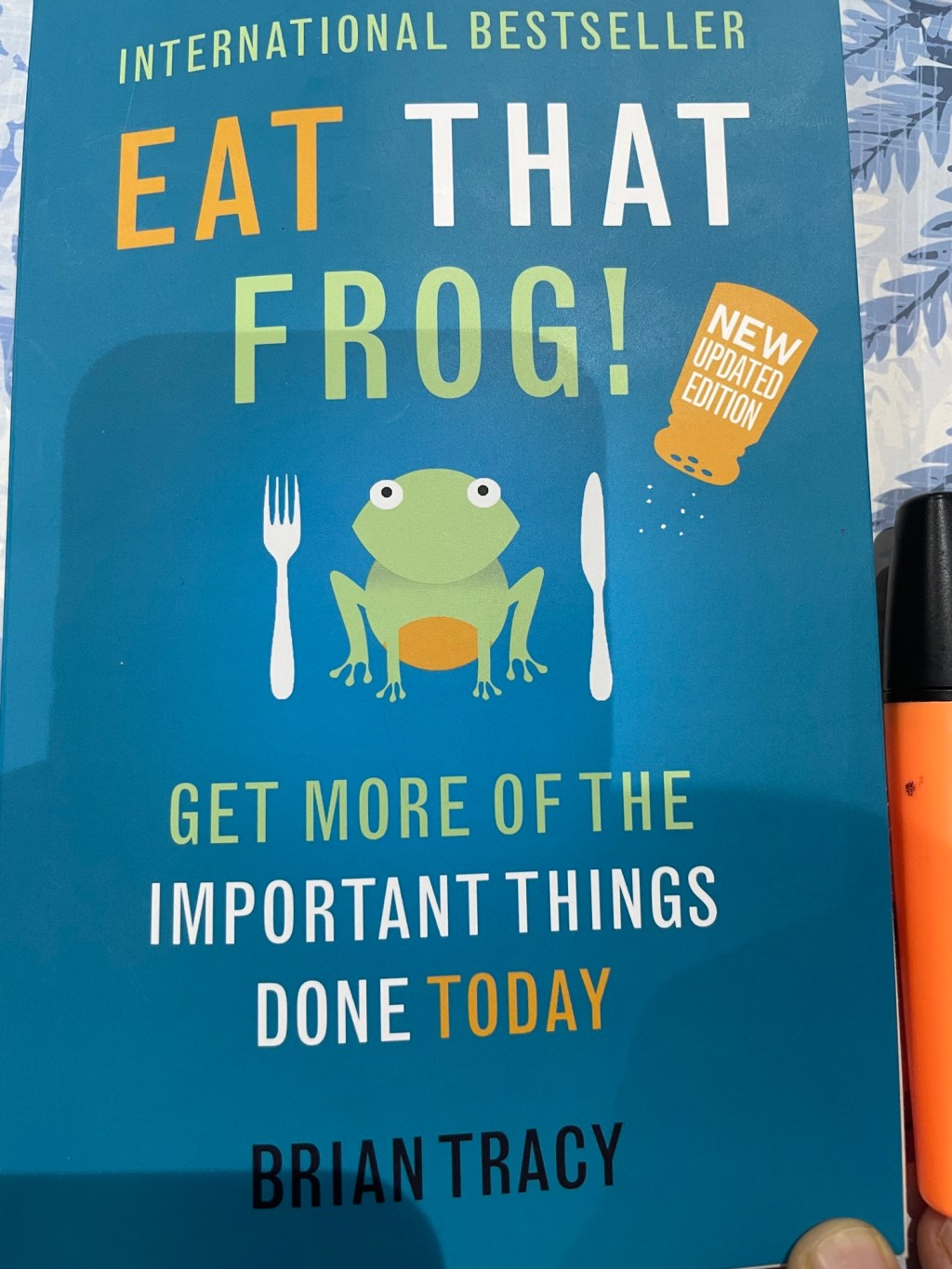
I have been reading Eat That Frog! by Brian Tracy and sharing my notes on X as I read. This is the full version of those notes, with how I apply them in my own work in data and architecture.
Why the frog? 🐸 The title comes from an old saying: eat a live frog first thing in the morning, and you can go through the rest of the day knowing the worst is already behind you.
The frog is the hardest task of your day: the one you are most likely to put off, but usually the one that makes the biggest difference. The book is about finding that task and organising yourself to do it first.
The line that stayed with me from the start: quality of time at work counts, quantity of time at home matters. The purpose of time management is to spend more time with the people you care about, doing things that give you joy.
🔭 At a glance
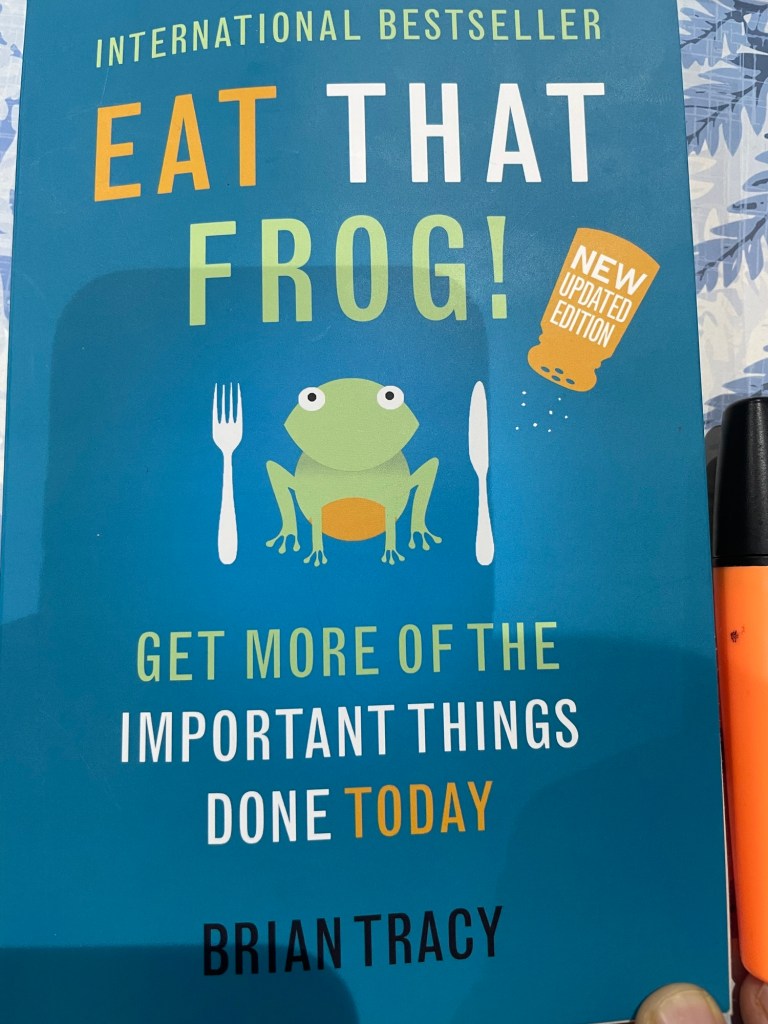
- 📖 Book: Eat That Frog! 21 Great Ways to Stop Procrastinating and Get More Done in Less Time
- ✍️ Author: Brian Tracy
- 📅 First published: 2001
- 🏷️ Topic: Productivity, prioritisation, procrastination
- ⭐ My rating: 3.5 out of 5. Why not 4 or higher, the book provides the recipe but the reader needs to self-motivate to work on it. There are not many inspirational thoughts or stories in the book to inspire and trigger people – but that is why the book is short and handy.
- 💡 In one line: Build success inch by inch. Work on the most important things with a plan, and the reward is more time with the ones you love, or with your own selves for the work you love to do.
🔑 Key ideas, in my words
🐸 Eat the frog first
The title says it all. Start the day with the biggest and most important task, the one you are most likely to put off. Everything else in the book is about knowing which one that is, and building the habit of doing it.
🔁 The three Ds of new habit formation
- ✅ Decision: to complete the task.
- 🏋️ Discipline: practise until it becomes automatic.
- 💪 Determination: persist until it becomes a permanent part of your personality.
🎯 Clarity about the purpose
Clarity is the most important concept in personal productivity. Vagueness and confusion lead to lack of motivation, and eventually procrastination. The book gives seven steps:
- 🤔 Decide exactly what you want.
- 📝 Write down your goals.
- ⏰ Set a deadline.
- 📋 List the tasks.
- 🗺️ Organise them into a plan.
- 🚀 Act on the plan.
- 🔄 Keep going, every day.
⚖️ Think about the consequences
Think about the consequences, +ve or -ve, of the actions you take or choose not to take. This helps to prioritise and avoid procrastination.
🔠 The ABCDE method
- 🔴 A: Must do (serious consequences)
- 🟠 B: Should do (mild consequences)
- 🟢 C: Nice to do (no consequences)
- 🤝 D: Delegate
- 🗑️ E: Eliminate
📊 Key Result Areas
Identify your Key Result Areas: the ones you are completely responsible for. If you don’t do it, it will not happen, and others depend on you. The rule is that your weakest one sets the bar for all your other skills.
Ask yourself: what one skill, if I did it in an excellent fashion, will boost my career the most? Then use the power of three: pick your top three in each area of life (business, family, financial, health, personal goals and biggest concerns). This helps to focus, prioritise and manage time well.
📚 Continuous learning
Continuous learning is the minimum requirement in any field. Read books and blogs, attend seminars and courses, and listen to audio while commuting.
⏳ Build a forcing system
A forcing system is a self-motivating system that gives you the freedom of choice to do well. Set your own deadlines and improve against them. Become an optimist. Not doing things will only confuse you and drag you behind. Doing them keeps you positive and in control.
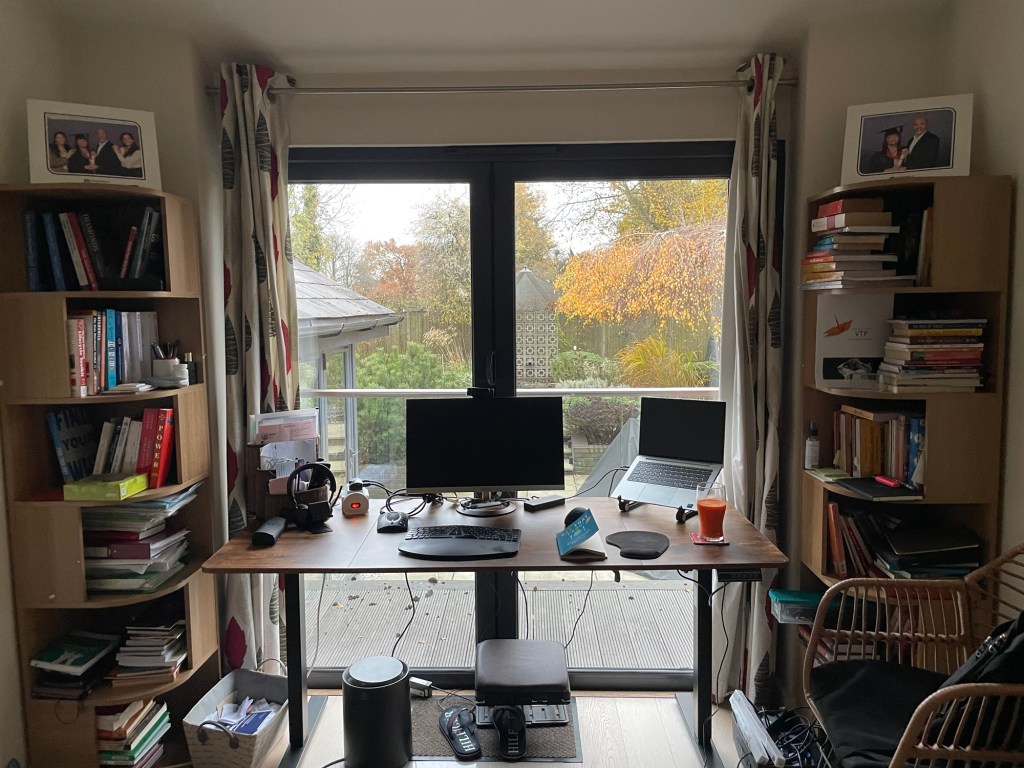
🧹 A clean work area
Prepare before you begin. Keep your work area clean and organised, with only what you need for the task, so that it invites you to sit down and get into the work. This is my desk at home.

📱 Technology and attention
Use technology to your advantage, for example reminders and notifications. But don’t let it eat away your time. Too much social media can become addictive. Per the book, an interruption takes about 17 minutes before you get your full attention back to the task. Plan a regular digital detox.
Time is of essence. Create large chunks of time to build your skills. The book quotes J Krishnamurti: “All of life is the study of attention; where your attention goes, your life follows.”
🏆 Reputation
Reputation is equally important. Be known for getting things done at work: not just the man of ideas, but ideas backed up with implementation. Get into the “flow” of getting things done, with a sense of urgency.
🛠️ How I apply it in data and architecture work
- 📏 Standards that stick. The three Ds apply in data teams too. A data standard/guardrail only sticks when the team decides on it, practises it until it is automatic, and keeps at it until it becomes part of how the team works.
- 💷 Business cases and data risks. Thinking about consequences is how we build business cases (cost/benefit) and tackle data risks: what happens if we do this, and what happens if we don’t.
- 🧭 Scoping projects and programmes. ABCDE is similar to MoSCoW, but it also has Delegate and Eliminate. Those two help to scope data projects and programmes, because not everything needs doing, and not everything needs doing by you.
- 📉 Weakest Key Results is the maximum height of what one can achieve. E.g., if delegation is your weakest Key Result Area, it sets the bar for the whole team. For a leader, not being able to delegate can limit what the team achieves.
- 🆕 Keeping up. In data architecture, new concepts are coming quick and fast. Not keeping up impacts not just you but your organisation too.
- 🏗️ Ideas backed by delivery. In architecture it is easy to be the person with the diagrams. The reputation worth having is for realising the architecture, from business to technical to implementation.
👥 Who should read it
Anyone who feels busy but not productive, and anyone leading a team who wants a simple, shared way to prioritise. It is a short book, so it is easy to come back to.
🧵 My reading notes on X
I shared these notes as a 15-post thread on X. Follow me at @meet_bhavins, where I post snippets from the books I read.
💭 Final thoughts
A great read. It brings things in perspective: build success, inch by inch. It is the hard grinding, day-in day-out, that matters. Identifying the most important and impactful things, and working on them with a plan, is the best way to come out from the depths of procrastination.
Creating time to improve can only save time for you to be with the ones you love. The rewards are huge.
Have you read it? 🐸 What’s your frog this week? Share your take in the comments.


Leave a Reply