What is the significance of names? The following write-up discusses the role of “name” played in India during 15th century, and in India’s current evolution.
The famous lines from Shakepeare’s “Romeo and Juliet”,
Juliet: “What’s in a name?
That which we call a rose. By any other name would smell as sweet.”
The Significance of Names: East vs. West
William Shakespeare (1564 – 1616), also called as England’s national poet and regarded as one of the best writers and dramatist in English language was a contemporary of another legendary poet from India named Tulsidas (1511 – 1623). Whilst Shakespeare wrote Hamlet, Othello, Romeo and Juliet Merchant of Venice, Macbeth, etc as one the finest works from many other creations, Tulsidas a Vaishnava saint, wrote Rāmacharitamānas1, and several others e.g. Vinaypatrikā, which is regarded as one of the finest poetries and has been considered by many critics as an epic having perfect characterisation of every character portrayed in the poem.
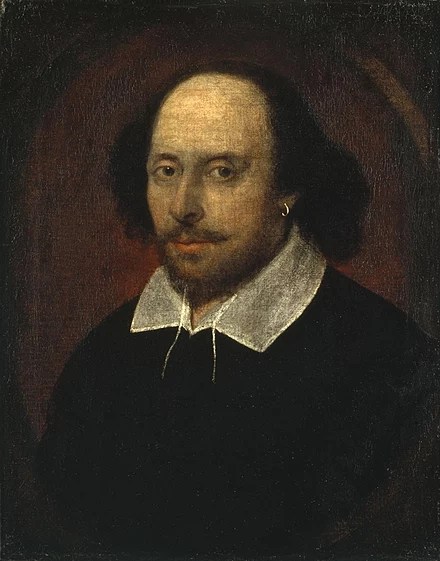

Shakespeare brought several revolutionary ideas in the style of writing, which can be seen in the Comedy of errors, and created world’s best tragedies. Tulsidas ji, in another part of the world brought cultural revolution that shaped the Hindu culture and todays’ form of Sānatan dharma.
Tulsidas Ji – A Brief Introduction
Saint Tulsidās was born in north of India. He re-wrote Rāmāyanā originally written in sanskrit language by Saint Vālmiki into Awadhi language spoken by common man. It was not a word by word translation but, he brought elements from Rāmāyanā, Upanishads, Purāna and Vedā and wrote the story of Rāmā in the form of poetry, known as Rāmacharitamanas.
The Importance of Name as per Rāmacharitamānas
Tulsidās ji in the first chapter of Rāmcharitamānas, Bālkānd, says,
ध्यानु प्रथम जुग मखबिधि दूजें। द्वापर परितोषत प्रभु पूजें।। [1.27.2]
कलि केवल मल मूल मलीना। पाप पयोनिधि जन मन मीना।। [1.27.2]
dhyānu prathama juga makhabidhi dūjēṃ. dvāpara paritōṣata prabhu pūjēṃ [1.27.2]
kali kēvala mala mūla malīnā. pāpa payōnidhi jana mana mīnā. [1.27.2]
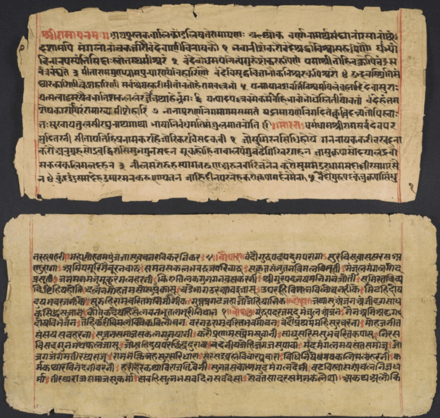
The above verse says, that in Satyuga2, to please God one has to do “Dhyān”, i.e. meditation, in Tretā, one has to perform Yagnā, in Dvāpara, prayers in a well prescribed manner is required to please God. All of the above are really hard as they all time consuming and requires to be done in a way prescribed in various books such as Vedās and Purāña. In Kaliyuga, the fourth yuga, it is very easy to enlighten onseself. One is required to just recite the name of God, “Rama”.

Another important book of Hinduism, Srimad Bhagwad Gitā, discusses about Dharma (One’s duties) and Karma (One’s action), and various routes to attain enlightenment. Ramacharitamānas in another verse says that in Kaliyuga neither Karma (action), nor Bhakti (devotion), nor Jñāna (Knowledge) avails; the name of Rāma is the only resort.
नहिं कलि करम न भगति बिबेकू। राम नाम अवलंबन एकू।। [1.27.4]
कालनेमि कलि कपट निधानू। नाम सुमति समरथ हनुमानू।। [1.27.4]
nahiṃ kali karama na bhagati bibēkū. rāma nāma avalaṃbana ēkū [1.27.4]
kālanēmi kali kapaṭa nidhānū. nāma sumati samaratha hanumānū [1.27.4]
The age of Kali is as it were the demon Kālanemi, the repository of all wiles; whereas the Name is the wise and mighty Hanuman (the monkey God). The very thought of the name puts an end to the illusions of the world, it is that powerful.
Jāmbavān (Jāmbavant), the bear, who is the wisest of entire Rāma’s army, on one occassion says to Rāma, “your name itself, my lord, is a bridge by ascending which men cross over the ocean of mundane existence”. Use your name to build the bridge.
सुनहु भानुकुल केतु जामzवंत कर जोरि कह।
नाथ नाम तव सेतु नर चढ़ि भव सागर तरिहिं।। [6.3.So]
sunahu bhānukula kētu jāmavaṃta kara jōri kaha.
nātha nāma tava sētu nara caḍhai bhava sāgara tarihiṃ [6.3.So]
The two monkeys, Nila and Nala, who were bestowed with magical powers in their childhood, enabling even a mountain to float on water, uses the name of Rāma, and construct the bridge so that His glory is sung forever.
Historical Context – Understanding India and its Circumstances in 15th Century
During the times of Tulsidasji, India and the native Indians faced three challenges, first one from it’s own philosophy, second due to the external aggression on its culture, and third the overall society became corrupt.
The Indian philosophy laid down by Ādi Shankaracharya, 9th century saint and philosopher, helped in reviving Hinduism but it brought the country/civilisation down on its knees. The main belief that nothing in the world is real, everything is an illusion (Maya), made people aloof and dispassionate. All innovations came to a standstill and people became disinterested in anything that was related to materialism. The country and people were engulfed in spirituality of a propertyless (nirguna) entity at a level that there was nothing to aspire for, they rejected everything that was identified as materialistic.
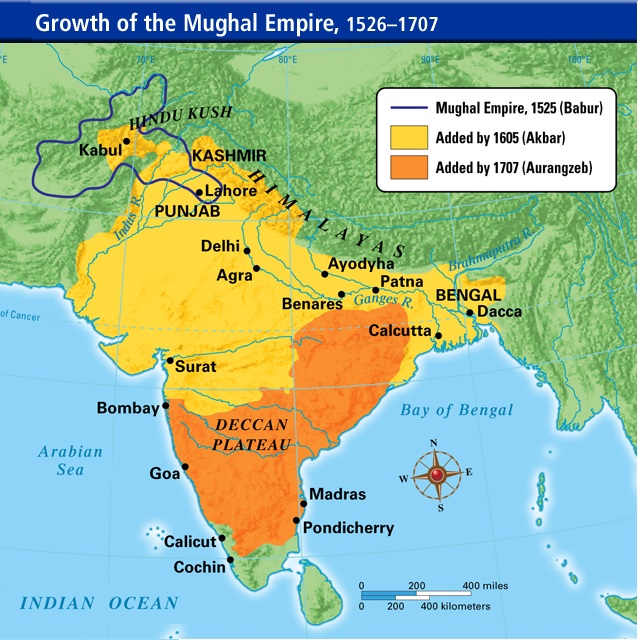
Secondly, the moghuls wanted to convert the hindus into muslims, and their interest was to make people further disoriented and make them incapable of revolting. They further added fuel to the fire of aloofness.
Third, the entire country got engrossed in corruption. There was no moral moral compass 🧭 or values or principles followed by the society. This was because the country was ruled by many invaders in past few centuries, and the main concern was related to survival rather than moral or ethical.
The Impact of Rāmacharitamānas and Rāma Nāma
The saints like Tulsidasji during the golden era of devotion did three things.
Firstly, restored the belief in common people, and the mass, via the name of God, and generated interest in life. The devotional movement of the 15th century brought the belief that there is something to live for, and by taking or reciting His name, a help is on its way.
Secondly, there were different sects and they used to fight amongst each other, e.g. Vaishnavites, ones that believed in Vishnu that were dominant in the north of India, and the Shaivites that believed in Shiva, and predominantly in the south. Rāmcharitamanās, built a bridge, “setu”, to bring these two sects together. Rāmcharitamānas is a poetry of Rāma (Vishnu) coming from the heart of Mahesh (Shiva), hence it was named, Rāmcharitamānas i.e. the story of the character (Charita) of Rāma that was in Shiva’s heart (Mānas). What a revolutionary thought! In this epic, Shivā says to her consort Parvati that, Rāma is Brahm, the singularity that is infinite. And in the same epic, Rāma calls Shivā as his God and builds a temple of Shivā at Rāmeshwar.
The name of the poetry did the trick, it became so popular that it brought these two sects, the north and the south of India together to fight against the oppressors.
Tulsidasji’s third and most important contribution was to restore values in the society. The best method was by defining what good character mean, and then making people see that in Rāma. Constantly narrating and singing the character of Rāma via Rāmcharitamānas, it reminded people of values that needs to be lived by.
Importance of Rāmcharitamānas in the Contemporary Era
The times have changed again. With modernisation and advancement in Science, and with West dominating in geopolitics and the consumerism on the rise, the people now question, What’s in the name? They are looking for a logical explanation on what is the benefit of being spiritual, and the importance of Rāma nāma.
Tulsidas ji probably knew about this too, and hence wrote those 10k+ verses, else he would have just recited Rāma in a couple of verses. Also, the modern day Tulsidas(s), Morari Bāpu, had 600 years to prepare for this day.
Morari Bapu unfolds the secrets jewels within the Rāmcharitamānas during his 9 day discourse, Rāmkathā, to provide the logical reasoning of the importance of the name, and Rāmcharitamānas. Ensuring the power that the country got from the name, the same identify is continued and is not lost due to modernisation.
Morari Bapu, in his recently concluded katha, Mānas Matoshree, held in Mumbai, India reiterated what Gandhi ji said post freedom. Gandhi ji said that his faith in the name of Rāma helped India to win the freedom.
एहिं कलिकाल न साधन दूजा। जोग जग्य जप तप ब्रत पूजा।।
रामहि सुमिरिअ गाइअ रामहि। संतत सुनिअ राम गुन ग्रामहि।। [129.3.Cho]
ēhiṃ kalikāla na sādhana dūjā. jōga jagya japa tapa brata pūjā..
rāmahi sumiria gāia rāmahi. saṃtata sunia rāma guna grāmahi.. [129.3.Cho]
He said Tulsidās has put the essence of entire Rāmcharitamānas in the second stanza of the above chopai. Meaning, Rāma alone should be remembered; Rāma alone be glorified; and he is the one that we should always listen to, reiterating the power of his name.3 Morari Bapu also mentioned that this stanza is the Prasthanatrayi of Tulsidas. He further added that these three actions, maps to the three principles of bapu’s life, Satya (Truth), Prem (Love) and Karunā (Compassion).
What do you think?
Do you still think that a rose could have been named anything or do you smell the rose when you come across the word rose?
Please, Share, Like and Subscribe
If you have enjoyed reading the write-up ✍️, please “like” 👍 and leave your feedback in the “Leave a Reply” 📋 section (scroll down to the bottom of this page); I would love to know if these are useful and how can I make it better. If you find this place interesting then please do not forget to “subscribe”🤝. Any recommendations on future topics that you want me to cover then please let me know. I may not know about it but I am an ardent reader 📚, and have a knowledgeable network of friends/colleagues, so I can definitely try and find the answer for you.
References
- Rāmcharitamānas by Goswāmi Tulsidās ji, https://www.ramcharitmanas.iitk.ac.in/ ↩︎
- Information about Chaturyuga: https://en.wikipedia.org/wiki/Yuga_Cycle ↩︎
- Morari Bapu, Mānas Mātoshri, Mumbai, Day 9 at 02:00:00, https://www.youtube.com/watch?v=AsWCMXhAfKA&t=8649s ↩︎
About the Author
Bhavin Shukla has been working as an IT Consultant in the data space for more than 25 Years. As a Data and Analytics professional, he has worked extensively for years on complex IT Transformation Programmes within Healthcare, Finance, Insurance and Telco domains.
Bhavin is driven by a sincere desire to embrace a spiritual existence rooted in values, while genuinely striving to enhance societal culture by fostering a supportive community where we stand by each other.
 Bhavin Shukla
Leave a reply to Ram Setu | राम सेतु – Bhavin Shukla Cancel reply