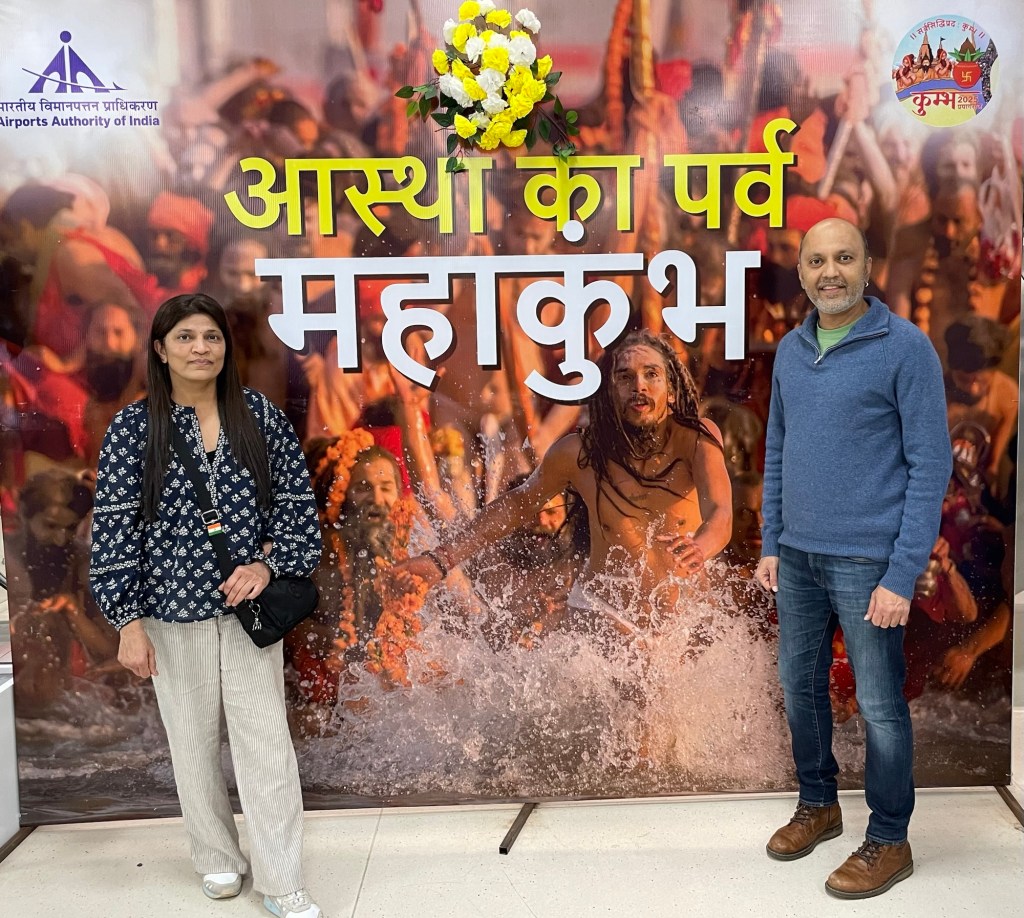
We had just returned from our trip to India on 6th February 2025 and had carried Ganga Jal (water from the river Ganga) with us. We had packed four small bottles, two for my daughters, one for a close friend of ours and the fourth bottle I had decided to give to someone, but I wasn’t sure who.
It was 8 pm on the 10th of February 2025, and it suddenly occurred to me to give it to this family we knew, but we were not that close. It was a Monday evening. I wasn’t sure if the family would be at home, but me being me, I drove there and knocked on their door, gave the bottle and left.
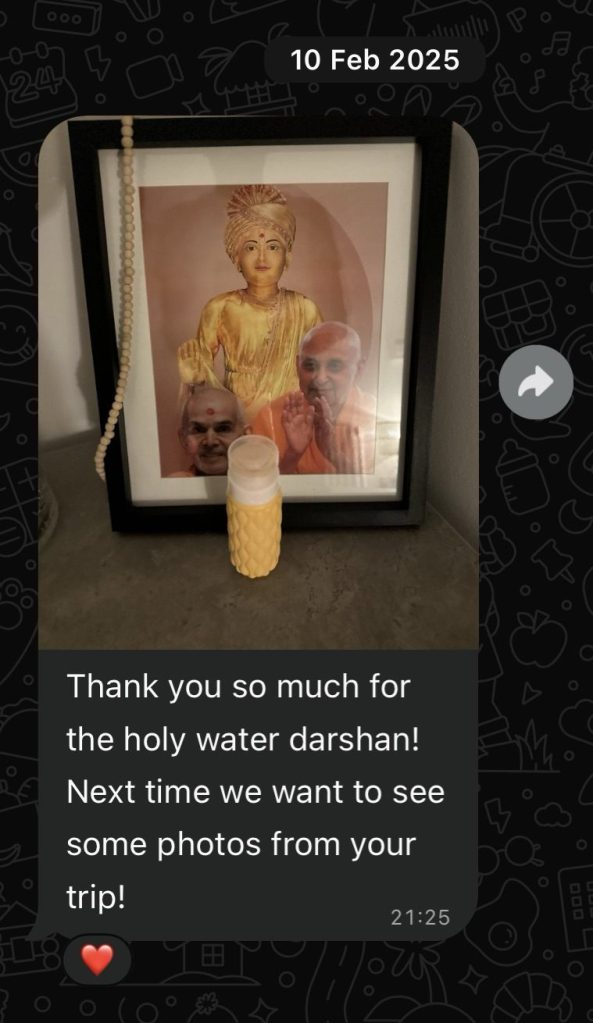
The family kept the bottle next to their Bhagwan and Guru’s photograph and then sent this lovely message to me on WhatsApp.
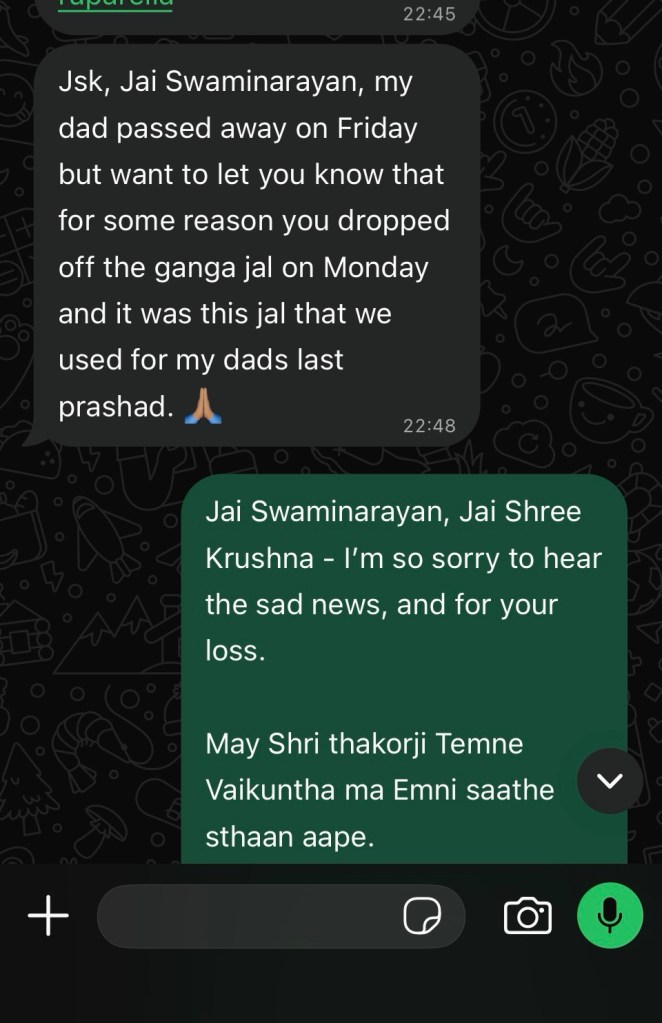
On the night of 16th February, I received a sad message from the same family friend saying that they had lost their loving dad on 13th February. First, I felt sad about what had happened, but then, on re-reading the message, I realised what my friend had said — that they had used the same Ganga Jal that I had left at their place “for some reason”. It was a mixed feeling — I had never met my friend’s dad, and for some reason, I happened to play a part in his life, as if he had been waiting for this Ganga Jal so that he could rest peacefully.
For readers who may not be familiar with Hindu rituals, in Hinduism, there is a tradition of putting basil and Ganga Jal in a person’s mouth during their last moments.
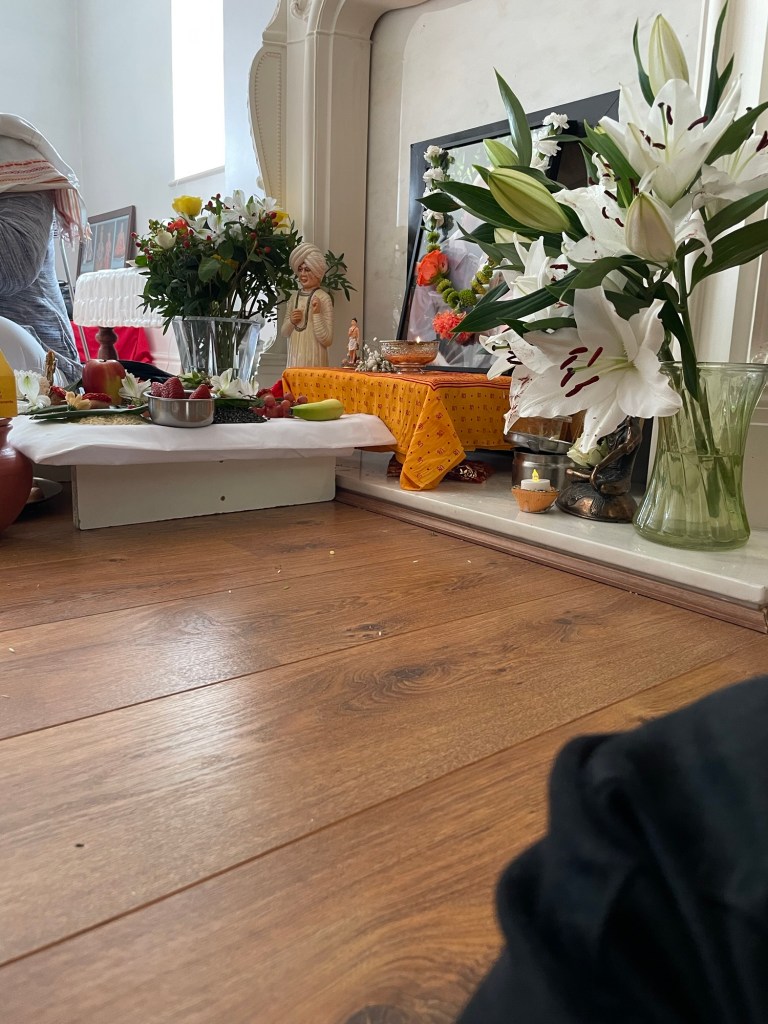
In Hinduism, it is believed that the soul of the deceased is still at home for twelve days after a person’s death. Hence, the process of the last rites finishes on the 13th day. The Ganga Jal was also used during the prayers during the rituals during these days, because the water from the holy river has miraculous powers to purify when it is mixed with anything, living and non-living.
It made me think about my trip to India and how it all took place. Everything was sudden and spontaneous.
It was the start of the new year, January 2025, and India was buzzing. Every other post shown in my social media feed was about an event known as Kumbh Mela, but this one was different; it came after 142 years and was called the Maha Kumbh.
Millions visit the Kumbh Mela, and I was told that it wasn’t too hygienic to be there. The trains were completely full, the flights were sold out and the ones available were at staggering prices, and even if you managed to reach there, it would be so crowded that it would dent your belief.
But I spontaneously decided to be at the Maha Kumbh, and at the last minute, my Mrs also joined me.
While returning from India to the UK, we could only carry these small bottles of the holy water in the cabin bag.
Gallery – The Maha Kumbh:
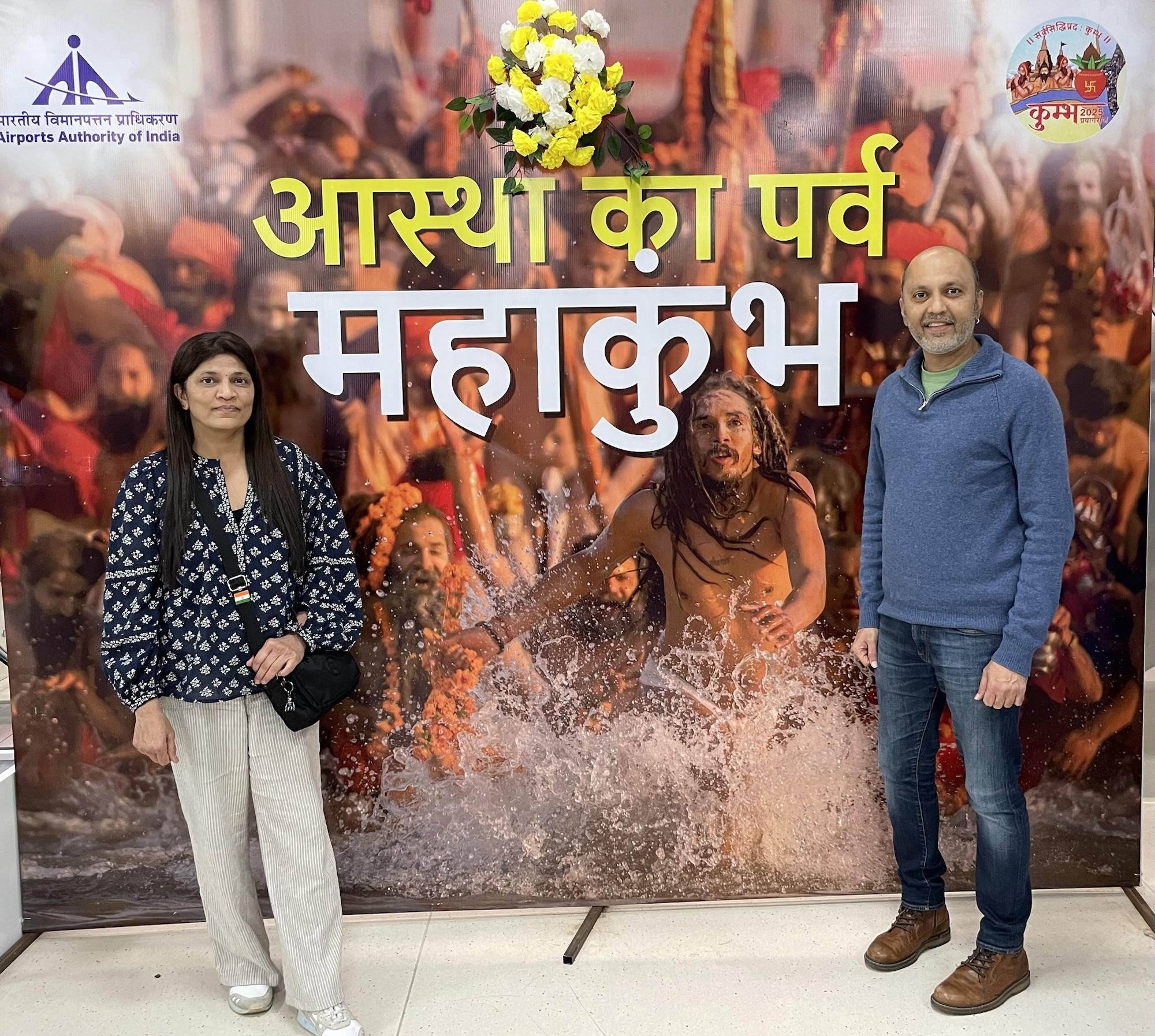
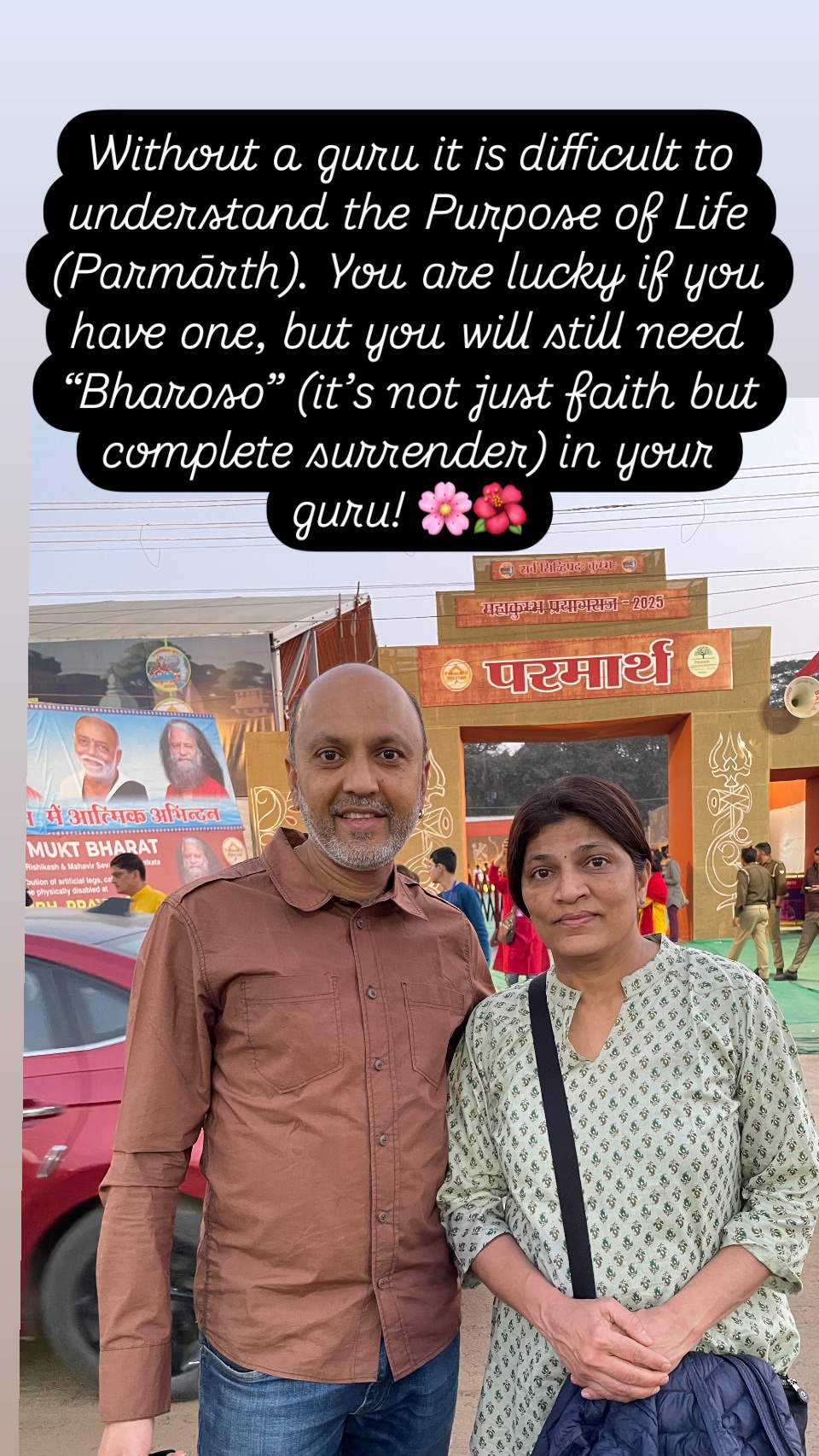
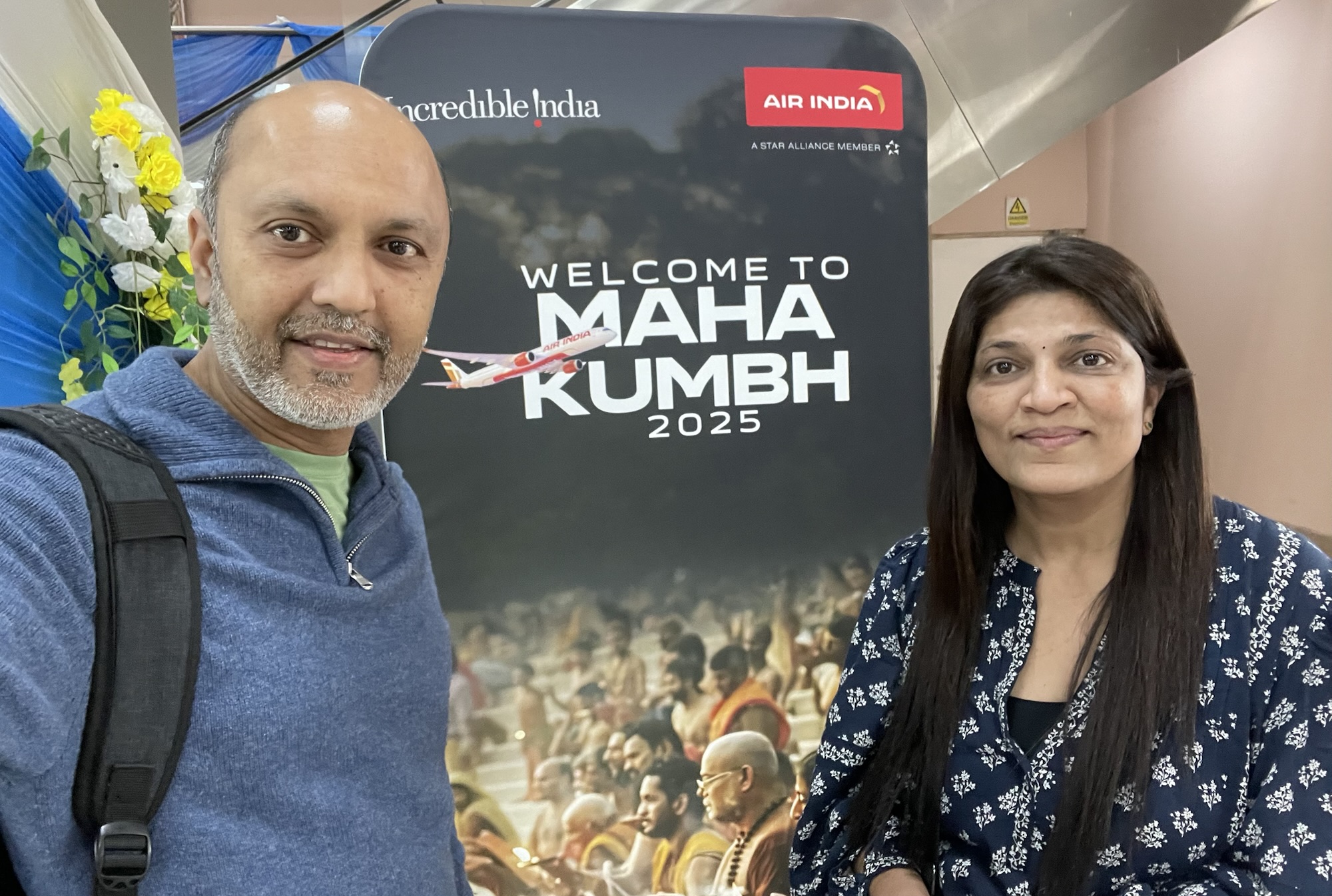
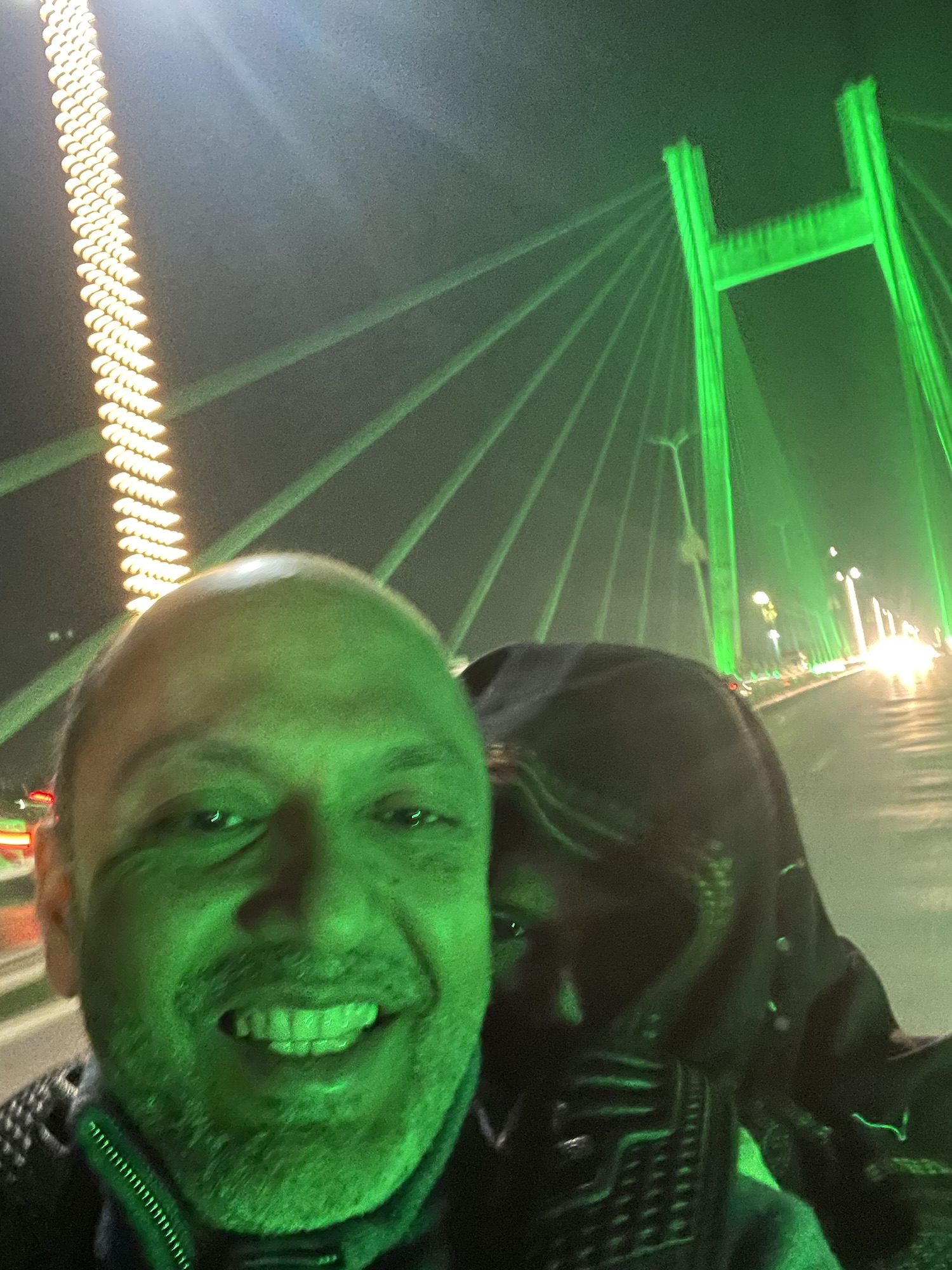
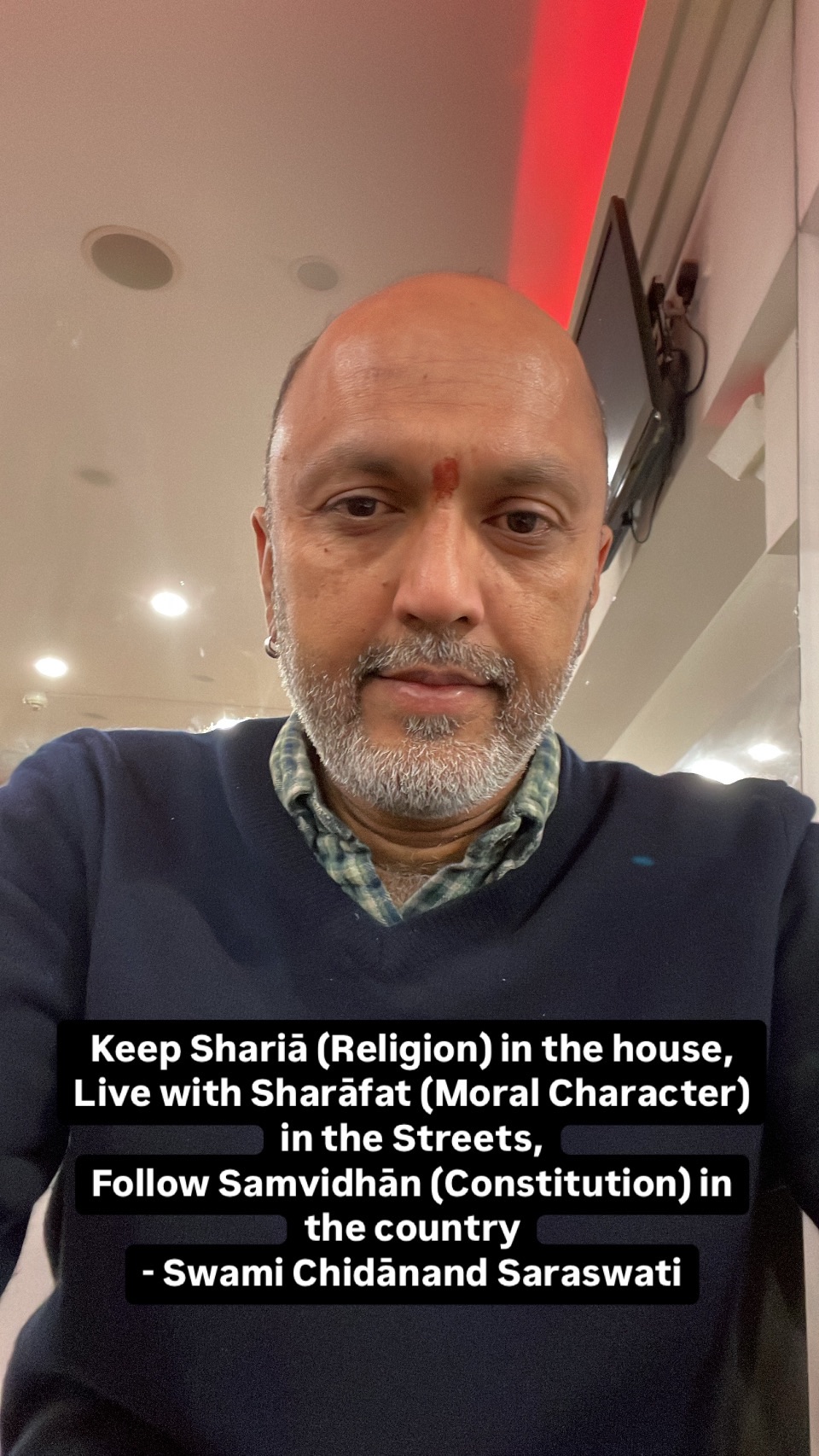
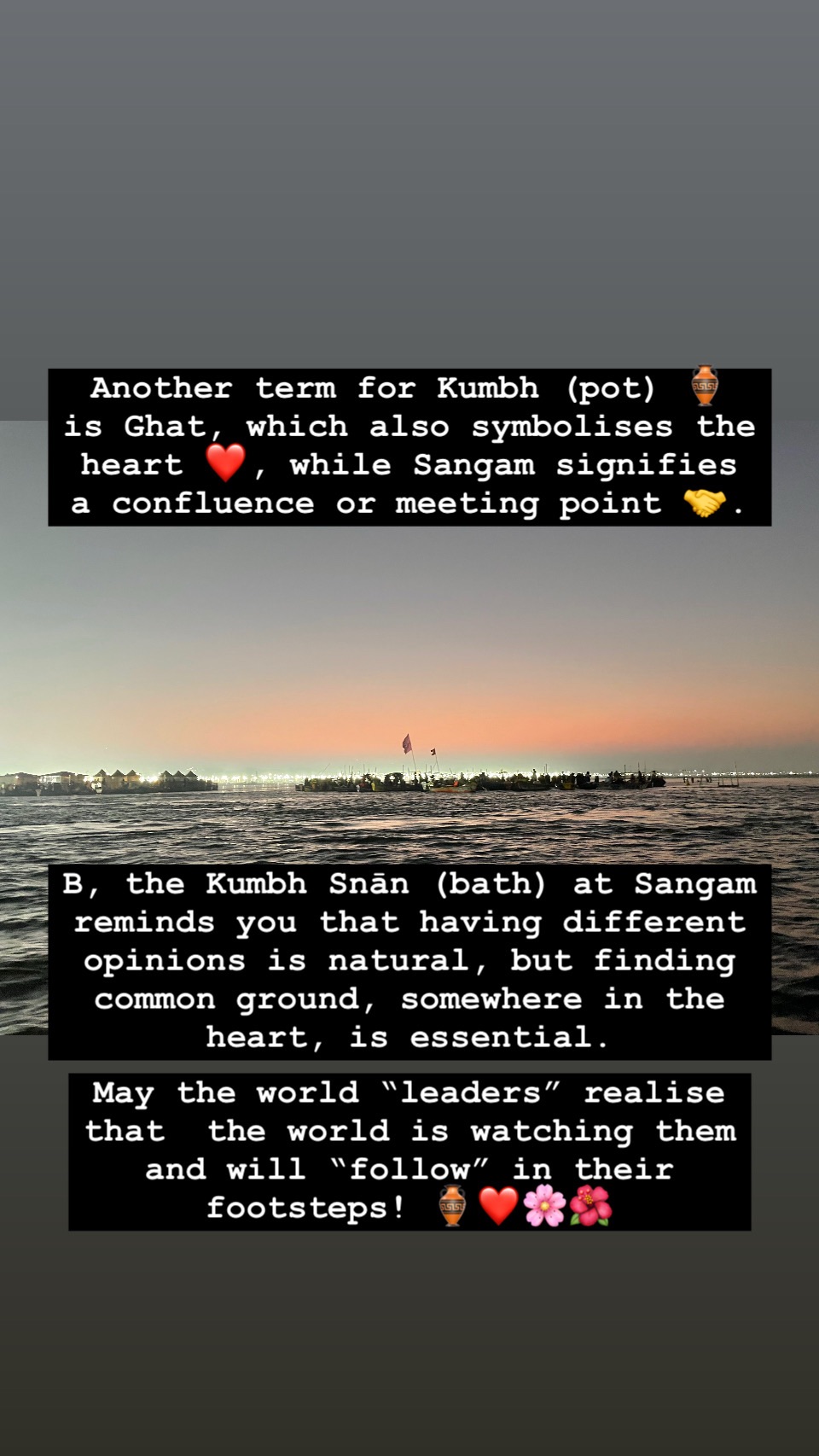
It was not just another bottle of water from the river Ganga. This one was special – it was collected during Maha Kumbh from the spot where the three rivers, Ganga, Yamuna and Saraswati, meet. This place is called “Sangam”, the meeting point, a confluence.
Kumbh means pot; another word for pot is Ghata. Ghata also means Heart.
Bathing at the Sangam during Maha Kumbha is considered very auspicious – probably because it means that there can be differences of opinion, but finding common ground in the heart is what we should all strive for.
But there is more to this – I probably had some debt to repay to the person for whom I accidentally brought the Ganga Jal from Sangam. Without this, it was impossible for me to be in that house on the night of 9th February 2025. We think that we are the doers, but there is someone else doing it via us.
A more beautiful thought on this is that, while making me pay the debt, the gentle soul took me to the Maha Kumbh and gave me an opportunity to bathe at the Sangam. It is all about give and take – if the intent and the means are good, then the end or the outcome is also good for all of the people involved.
Summarising
It just strengthened my belief that everything happens for a reason. My last-minute booking to India for Maha Kumbh, visiting Prayagraj even when everyone in India mentioned that the place was overly crowded and not hygienic, I somehow managed to bathe at the holy spot of Sangam, and because my daughters could not travel with me because of their schools, I thought of getting the holy water of Ganga, i.e. bringing Mother Ganga to them. But from nowhere, I ended up spontaneously giving one of the bottles to a family friend, which became of good use to his father when he passed away a couple of days after I gave it to them.
This all connects, but it is not with a start and an end; it is all cyclic, i.e. give and take. Possibly, I became the vehicle to get the Ganga Jal delivered to my friend’s father, but it is also equally possible that because of him, I managed to take a dip in the holy river during Maha Kumbh.
This is why the best thing is to follow our intuition and, without taking any credit for the work, because we don’t know who the real doer is, we should focus on our karma and dharma i.e. we should simply perform our duties with good intentions, without worrying about the outcome or claiming credit for the action, also known as Nishkāma karma in Bhagwan Geeta. Who knows when the beneficiary becomes the person who gives the benefit?
Har Har Gange.


Leave a Reply